|
Hanbyel Cho
I am currently an AI Robotics Research Scientist at Samsung
Electronics, working on AI-driven humanoid whole-body control and interaction. My research
integrates human motion understanding, reinforcement learning, and generative AI to enable
humanoid
robots to learn and adapt from human motion in real-world environments.
I earned my PhD in Electrical Engineering from KAIST,
where I was advised by Prof. Junmo Kim. My
doctoral research focused on capturing and reconstructing human-related subjects—such as body pose
and shape—under real-world conditions for practical applications in immersive environments.
During my PhD studies, I gained valuable experience through two internships at Meta Reality Labs—one in Pittsburgh, PA, USA
(2023), and another in Redmond, WA, USA (2024). I was also honored to be selected as a finalist
for
the Qualcomm
Innovation Fellowship in both 2022 and 2023.
If you're interested in collaborating, feel free to reach out!
✉️ Email
📄 CV (Sep
2026)
👤 Bio
🎓 Scholar
💼 LinkedIn
|
|
Research Focus
My research builds upon my background in computer vision and human motion
understanding, extending it toward learning-based humanoid whole-body
control and interaction. I am broadly interested in reinforcement
learning, generative AI, and robotics,
with a focus on:
- Humanoid whole-body motion generation and control
- Vision-based imitation learning for humanoid behaviors
- Humanoid-object interaction and manipulation
- Sim-to-real transfer for humanoid systems
My long-term goal is to build generalizable humanoid agents capable of
perceiving human environments and performing complex physical interactions in the real
world.
|
|
Publications
My current research centers on learning-based humanoid whole-body control and locomotion, aiming
to
enable robots to learn agile and adaptive motion from data. Previously, I studied 3D human
reconstruction and motion understanding, which naturally led to my current interest in AI-driven
humanoid behavior learning. Below are my recent publications; some papers are highlighted.
|
|
|
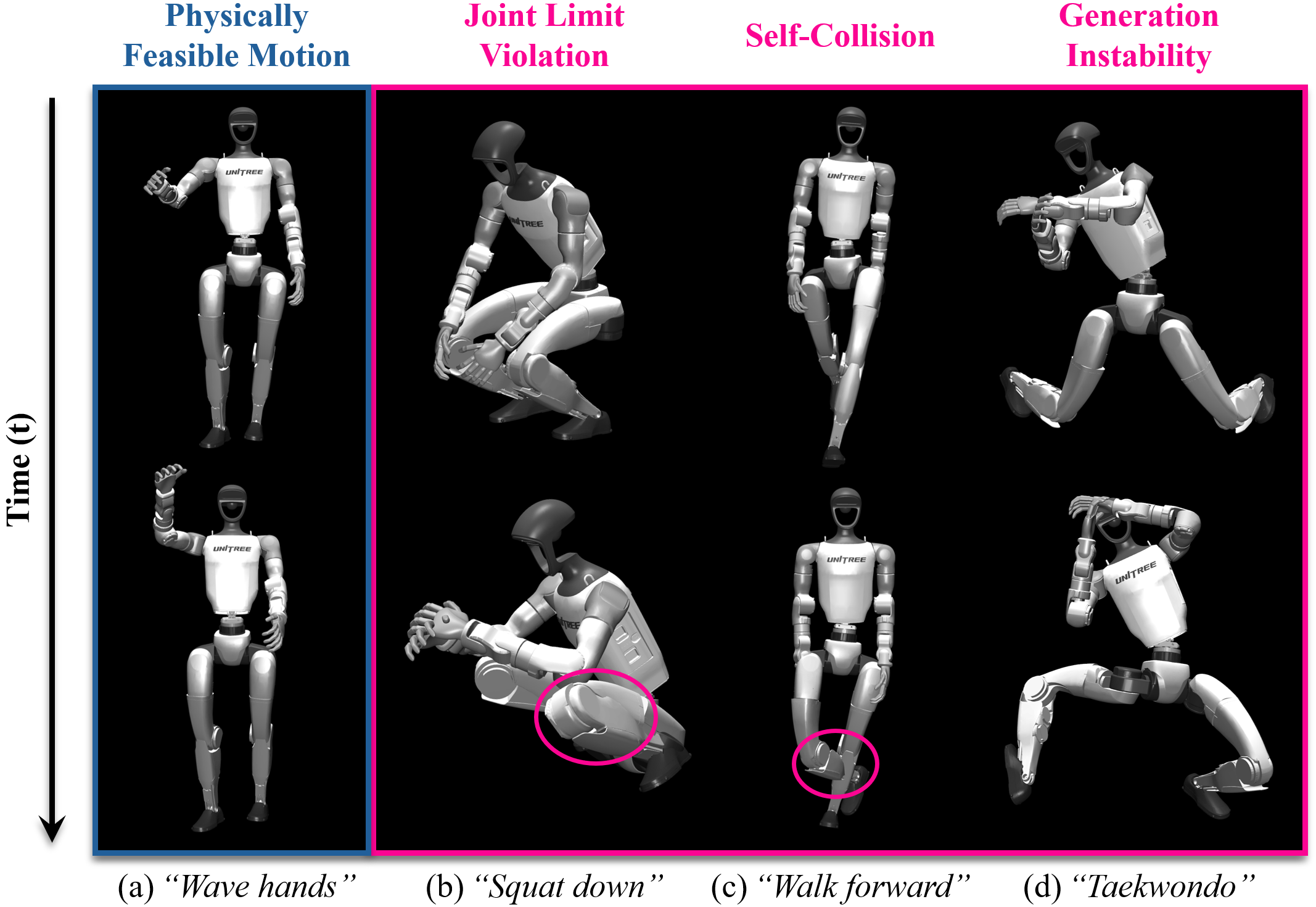
SafeFlow: Real-Time Text-Driven Humanoid Whole-Body Control via
Physics-Guided Rectified Flow and Selective Safety Gating
Hanbyel Cho,
Sang-Hun Kim,
Jeonguk Kang,
Donghan Koo
arXiv Preprint, 2026
project page
/
arXiv
A real-time text-driven humanoid whole-body control framework combining physics-guided rectified
flow matching for executable motion generation with a 3-Stage Safety Gate for robust deployment
under out-of-distribution text inputs on the Unitree G1.
|
|
|
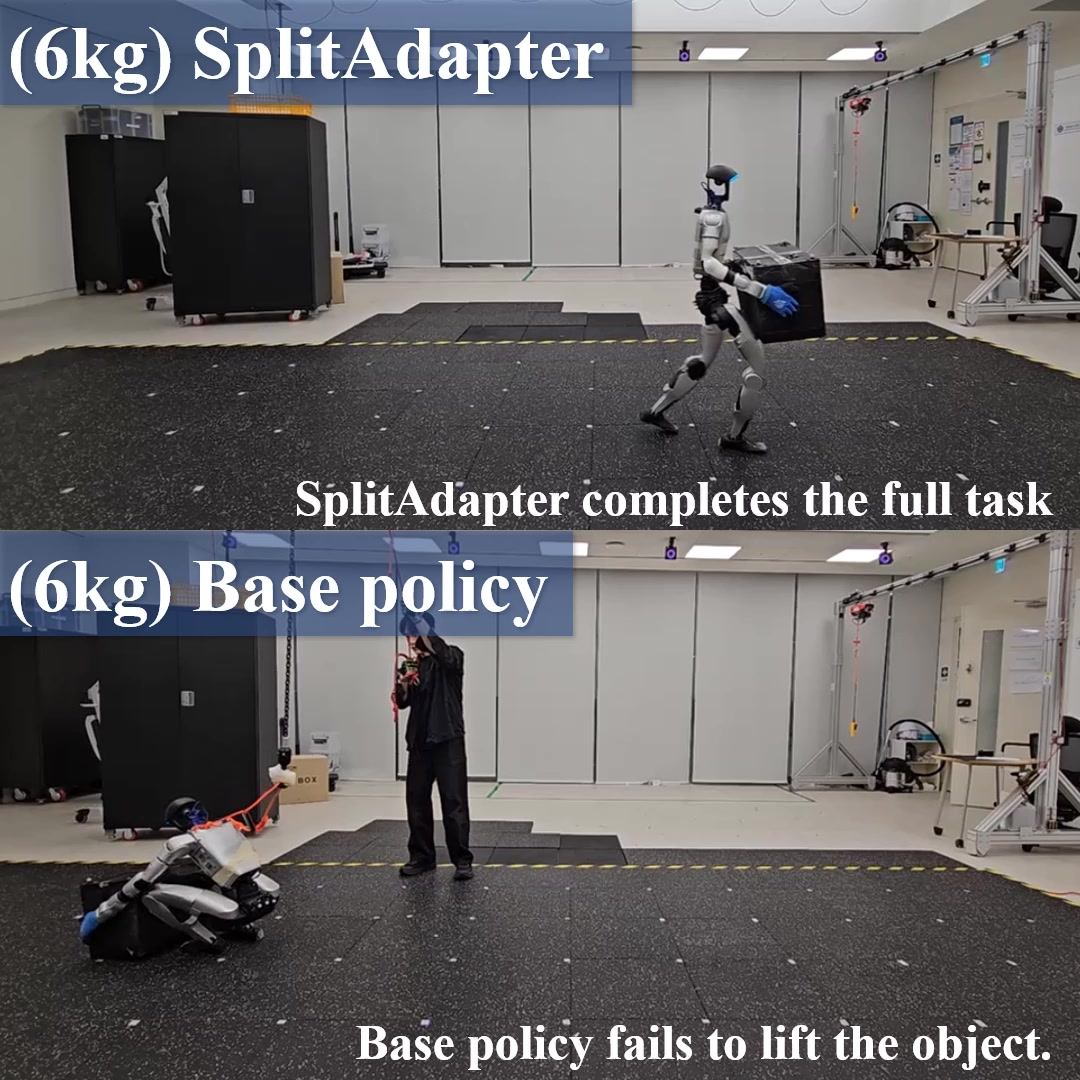
SplitAdapter: Load-Aware Humanoid Loco-Manipulation via Factorized Adaptation
Jeonguk Kang,
Hanbyel Cho,
Sanghyun Kang,
Donghan Koo
arXiv Preprint, 2026
project page
/
arXiv
A factorized adaptation framework for humanoid loco-manipulation that splits load and dynamics context into separate encoders, improving robustness under heavy-load conditions via GRL-based cross-adversarial regularization and hierarchical FiLM modulation.
|
|
|
CA-GMT: Contact-Aware Low-Rank Adaptation of Motion Tracking for Whole-Body Teleoperation
Sang-Hun Kim,
Hanbyel Cho,
Sunkyum Yoo,
Donghan Koo
Conference on Robot Learning (CoRL), 2026
project page
/
arXiv
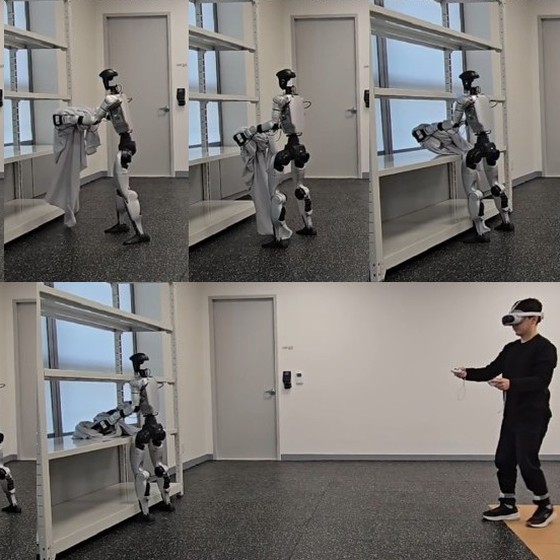
A contact-aware LoRA-based adaptation method for whole-body motion tracking that improves teleoperation robustness by modeling contact dynamics during manipulation tasks.
|
|
|
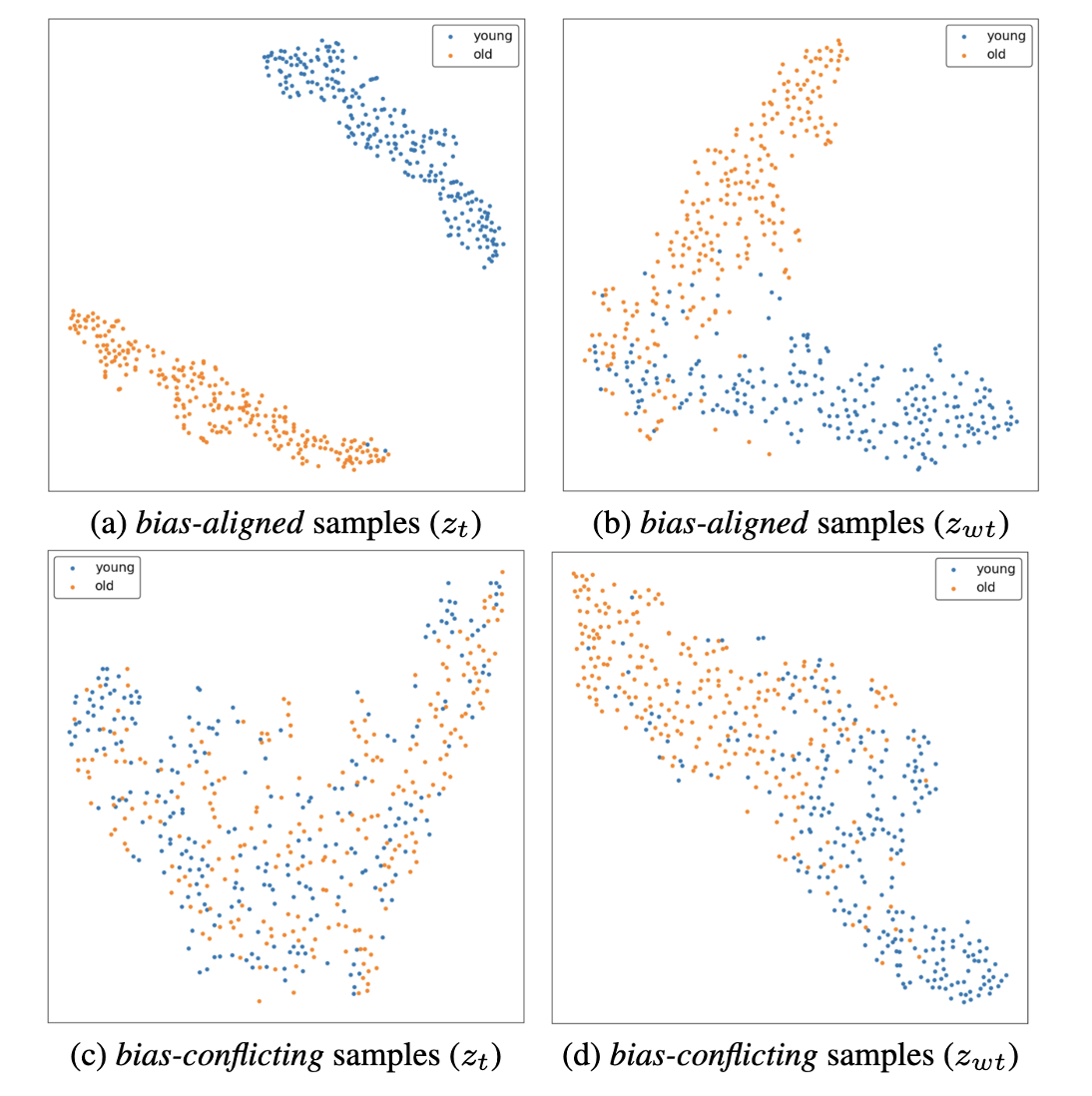
Controllable Feature Whitening for Hyperparameter-Free Bias
Mitigation
Yooshin Cho,
Hanbyel Cho,
Janghyeon Lee,
Hyeong Gwon Hong,
Jaesung Ahn,
Junmo Kim
IEEE/CVF International Conference on Computer Vision (ICCV),
2025
arXiv
A lightweight and hyperparameter-free debiasing method that whitens feature representations to
remove bias, achieving fairness and utility trade-off without adversarial learning.
|
|
|
Efficient Dynamic Scene Editing via 4D Gaussian-based Static-Dynamic
Separation
Joohyun Kwon*,
Hanbyel Cho*,
Junmo Kim (*Equal
contribution)
IEEE/CVF Conference on Computer Vision and Pattern Recognition (CVPR), 2025
project page
/
arXiv
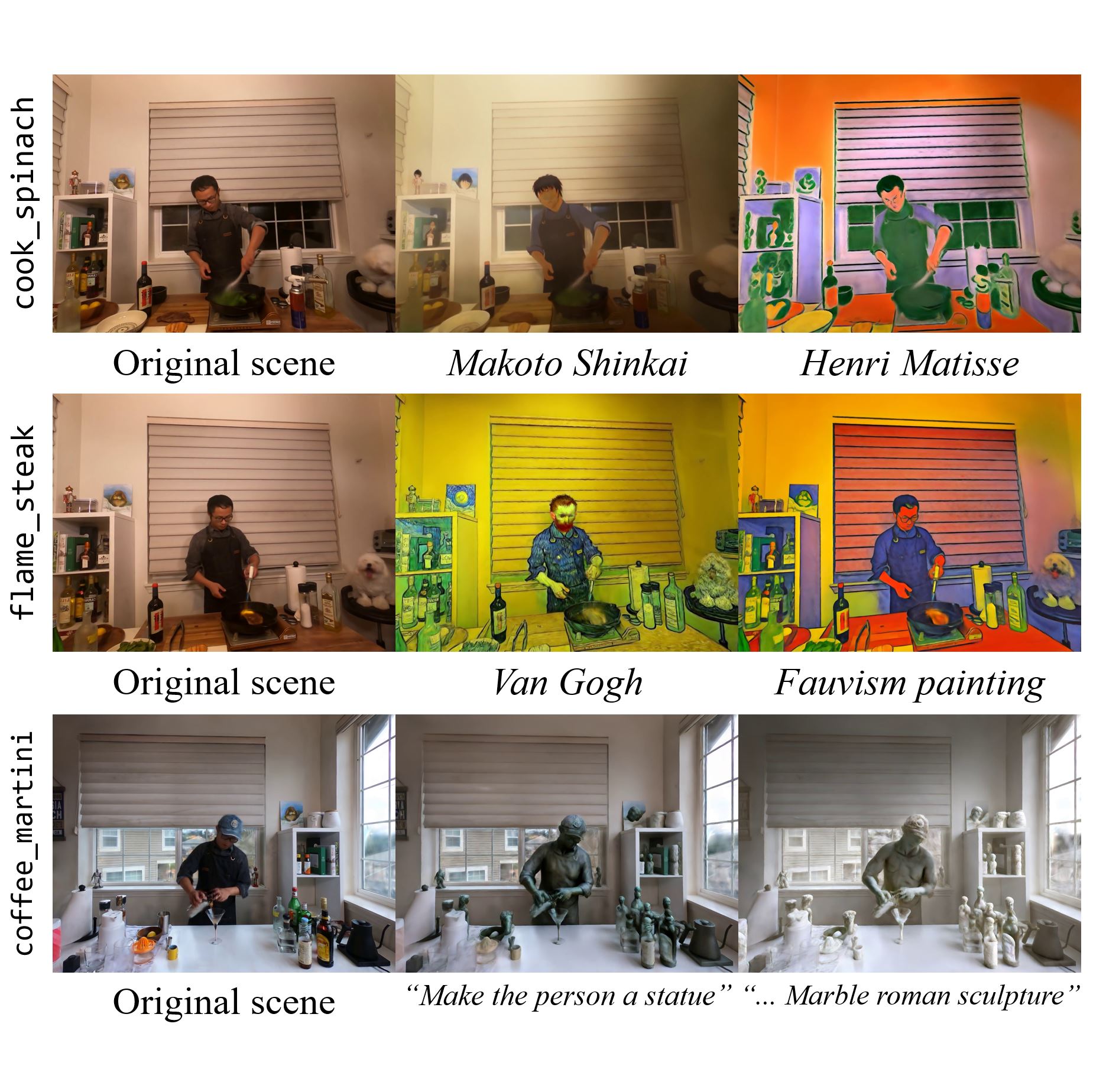
Efficient 4D dynamic scene editing method using 4D Gaussian Splatting, focusing on static 3D
Gaussians and score distillation refinement to achieve faster, high-quality edits.
|
|
|
Foreseeing Reconstruction Quality of Gradient Inversion: An Optimization
Perspective
Hyeong Gwon Hong,
Yooshin Cho,
Hanbyel Cho,
Jaesung Ahn,
Junmo Kim
The 38th Annual AAAI Conference on Artificial Intelligence (AAAI), 2024
arXiv
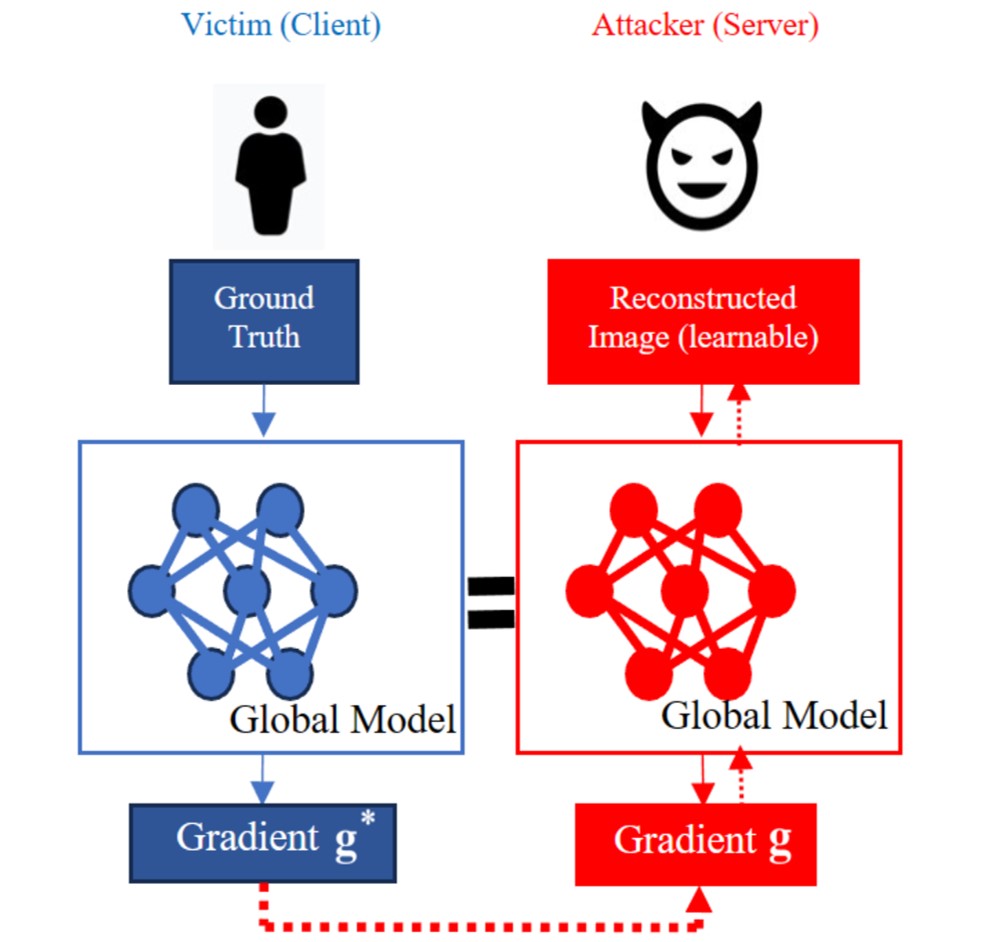
Proposes a novel loss-aware vulnerability proxy (LAVP) for gradient inversion attacks in federated
learning, using the maximum or minimum eigenvalue of the Hessian to capture sample vulnerabilities
beyond traditional gradient norm.
|
|
|
Generative Approach for Probabilistic Human Mesh Recovery using Diffusion
Models
Hanbyel Cho,
Junmo Kim
IEEE/CVF International Conference on Computer Vision (ICCV),
2023, CV4Metaverse Workshop
arXiv
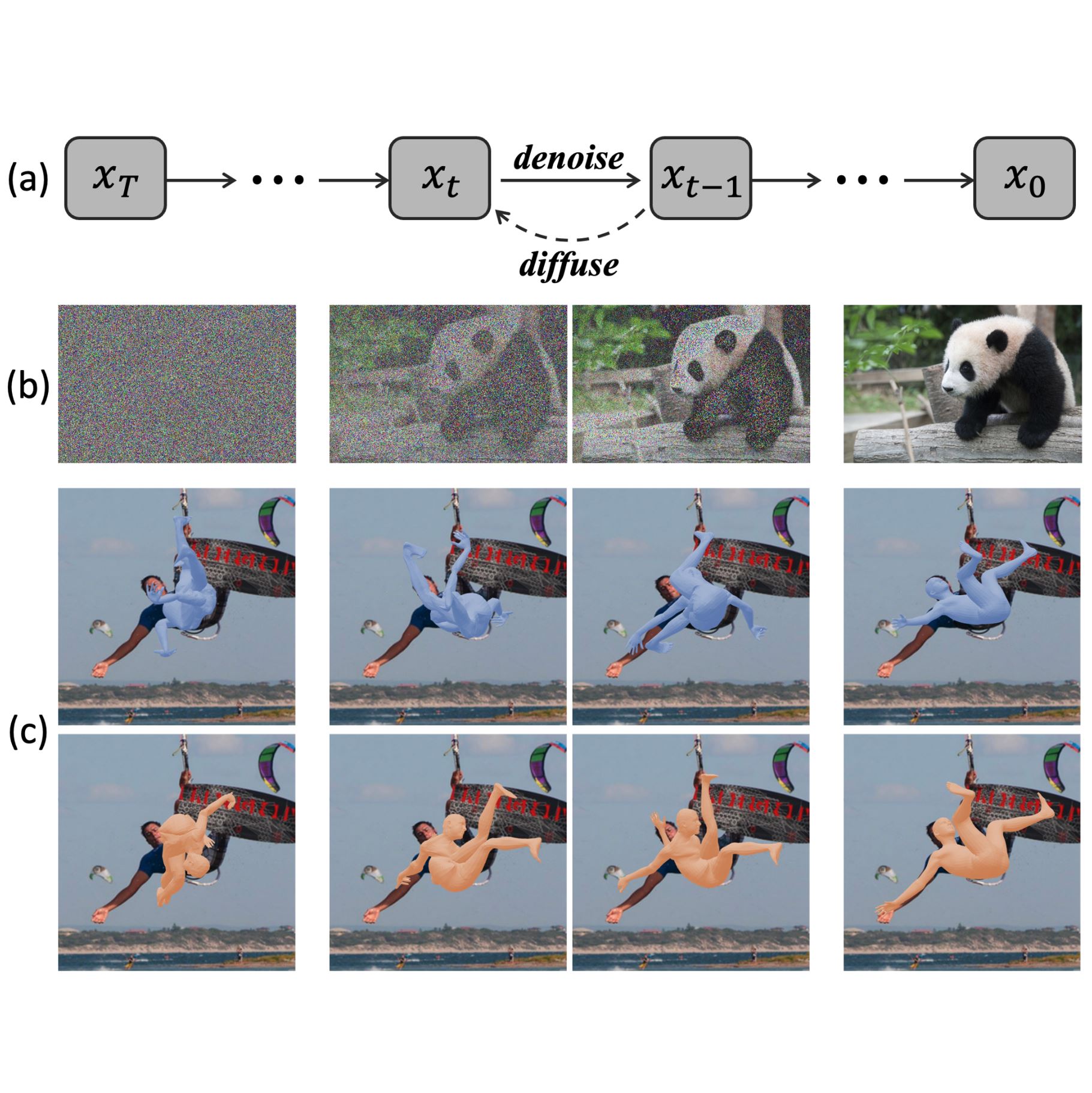
Proposes a novel generative framework for 3D human mesh recovery, leveraging denoising diffusion
to
model multiple plausible outcomes and address the inherent ambiguity in the task.
|
|
|
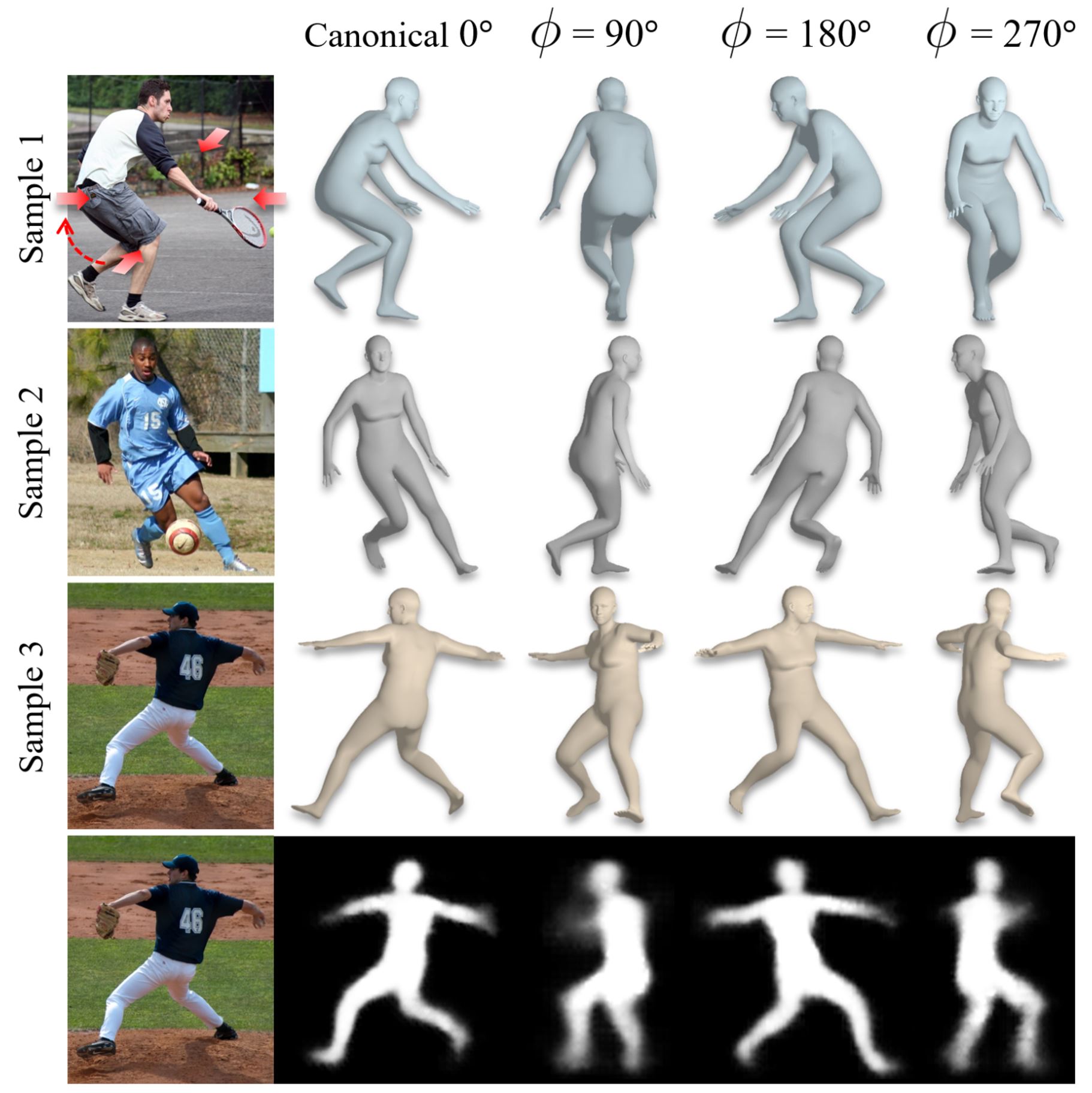
Implicit 3D Human Mesh Recovery using Consistency with Pose and Shape
from
Unseen-view
Hanbyel Cho,
Yooshin Cho,
Jaesung Ahn,
Junmo Kim
IEEE/CVF Conference on Computer Vision and Pattern Recognition (CVPR), 2023
arXiv
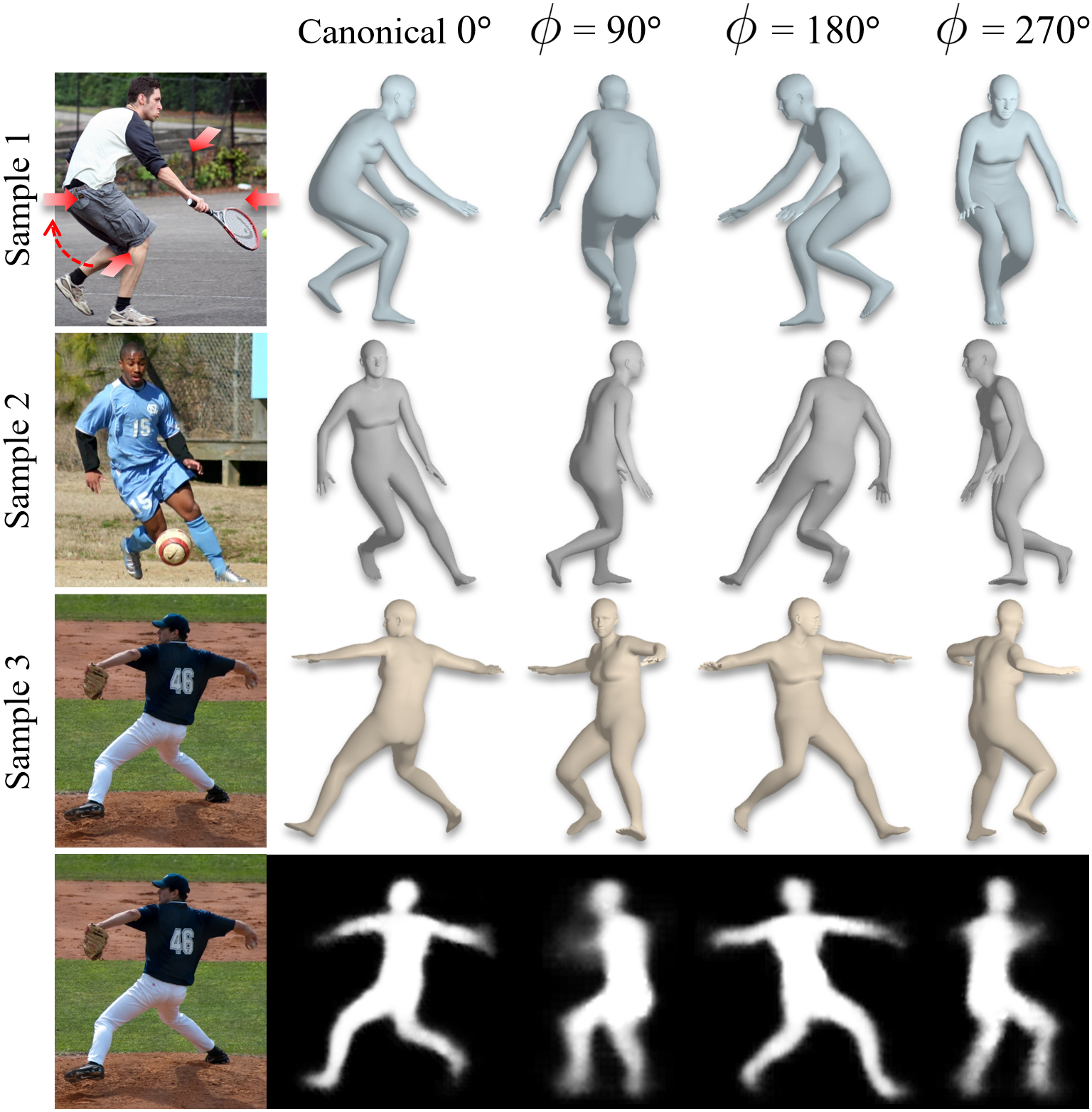
Leveraging neural feature fields to render multi-view feature maps and enforcing cross-view
consistency enables accurate 3D human mesh recovery from a single image.
|
|
|
Video Inference for Human Mesh Recovery with Vision Transformer
Hanbyel Cho,
Jaesung Ahn,
Yooshin Cho,
Junmo Kim
IEEE International Conference on Automatic Face and Gesture Recognition (IEEE FG), 2023
arXiv
Replacing naive GRU-based modeling with a Vision Transformer and a learnable Channel Rearranging
Matrix reduces motion fragmentation, boosting human mesh recovery accuracy, robustness, and
efficiency.
|
|
|
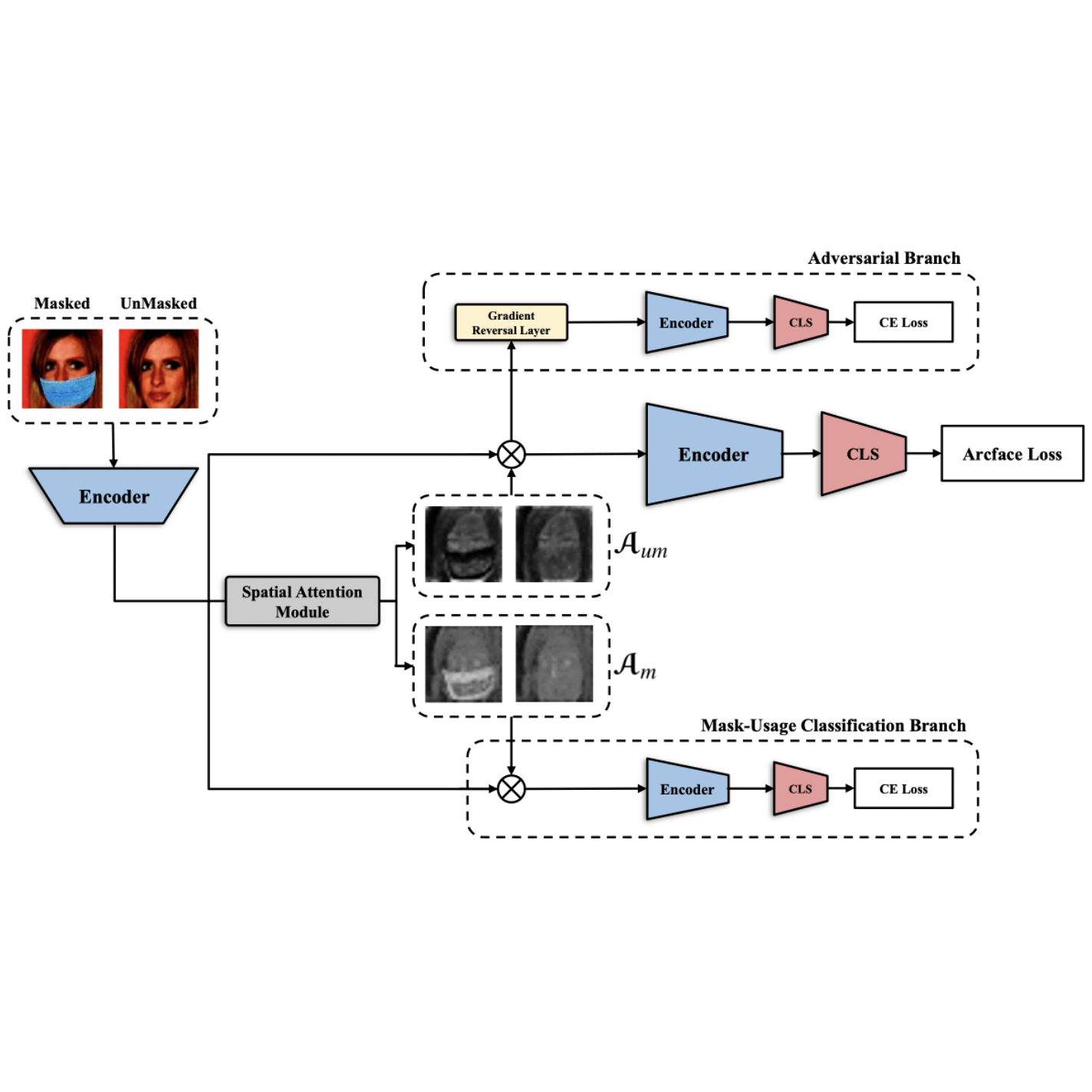
Localization using Multi-Focal Spatial Attention for Masked Face
Recognition
Yooshin Cho,
Hanbyel Cho,
Hyeong Gwon Hong,
Jaesung Ahn,
Dongmin Cho,
Junmo Kim
IEEE International Conference on Automatic Face and Gesture Recognition (IEEE FG), 2023
arXiv
Masked face recognition approach that leverages multi-focal spatial attention to precisely isolate
unmasked features.
|
|
|
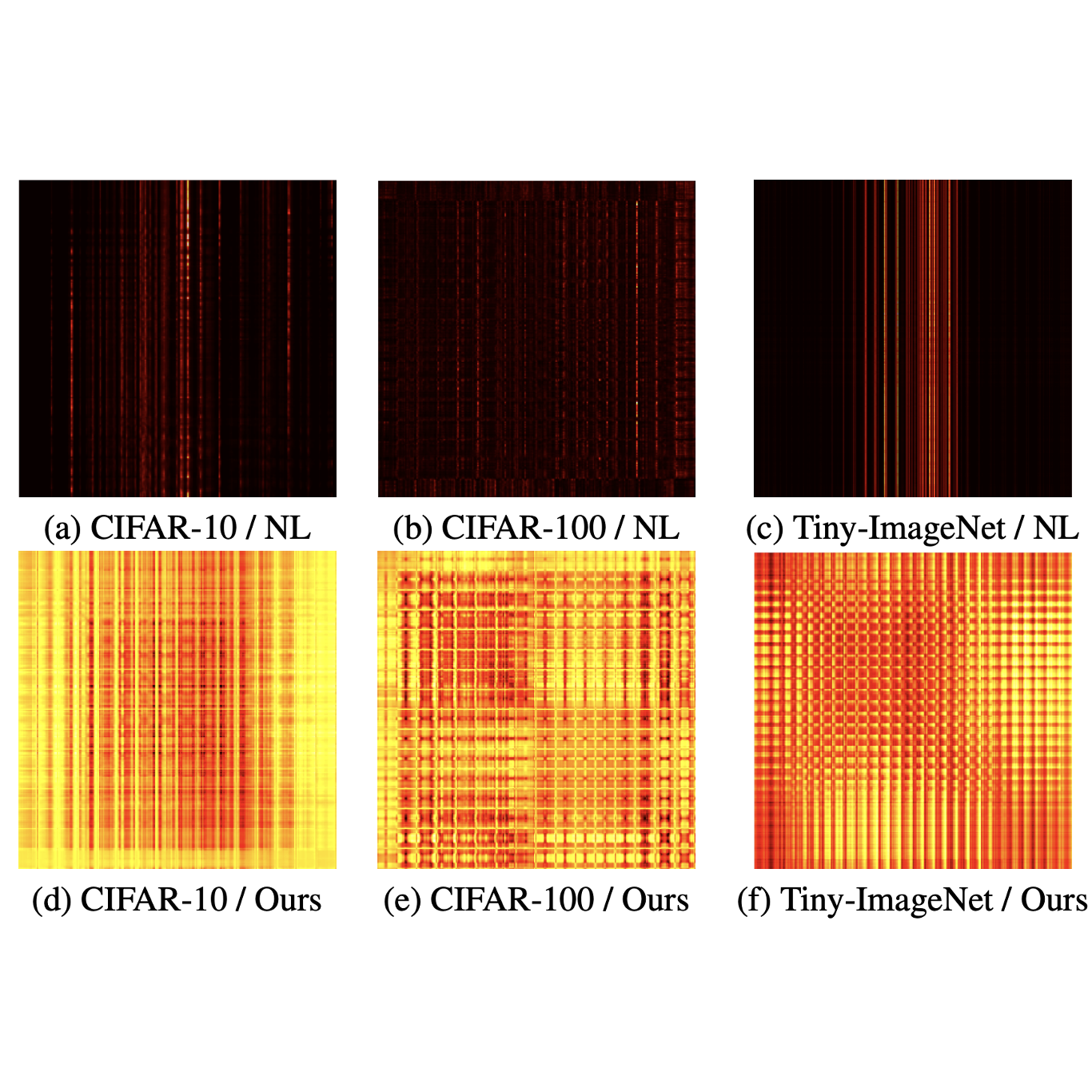
Rethinking Efficacy of Softmax for Lightweight Non-Local Neural
Networks
Yooshin Cho,
Youngsoo Kim,
Hanbyel Cho,
Jaesung Ahn,
Hyeong Gwon Hong,
Junmo Kim
IEEE International Conference on Image Processing (ICIP), 2022
arXiv
Replacing softmax in non-local blocks with a simple scaling factor mitigates its over-reliance on
vector magnitude, thereby improving performance, robustness, and efficiency.
|
|
|
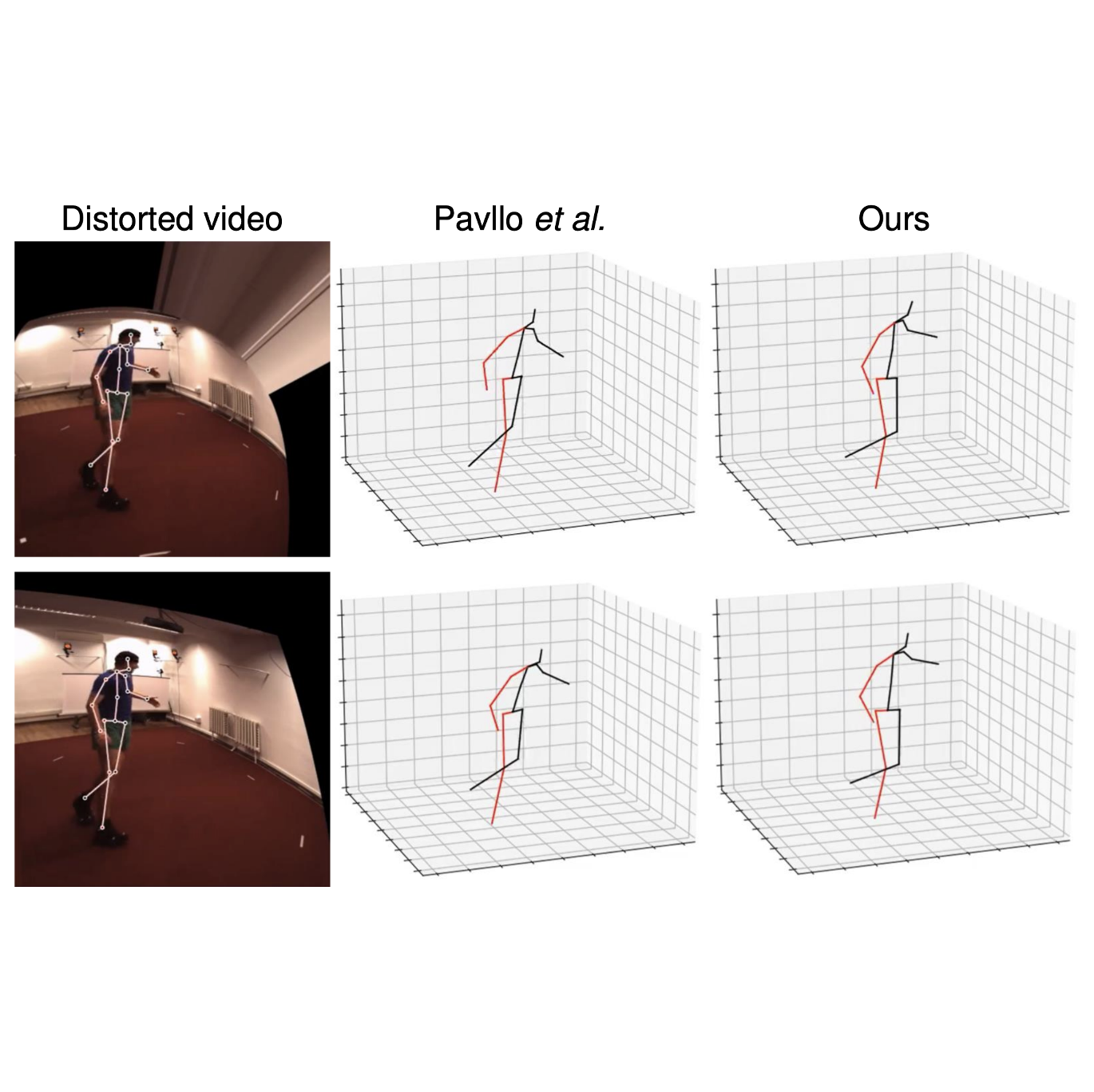
Camera Distortion-aware 3D Human Pose Estimation in Video with
Optimization-based Meta-Learning
Hanbyel Cho,
Yooshin Cho,
Jaemyung Yu,
Junmo Kim
IEEE/CVF International Conference on Computer Vision (ICCV),
2021
arXiv
3D human pose estimation model that leverages MAML and synthetic distorted data to rapidly adapt
to
various camera distortions without requiring calibration.
|
|
|
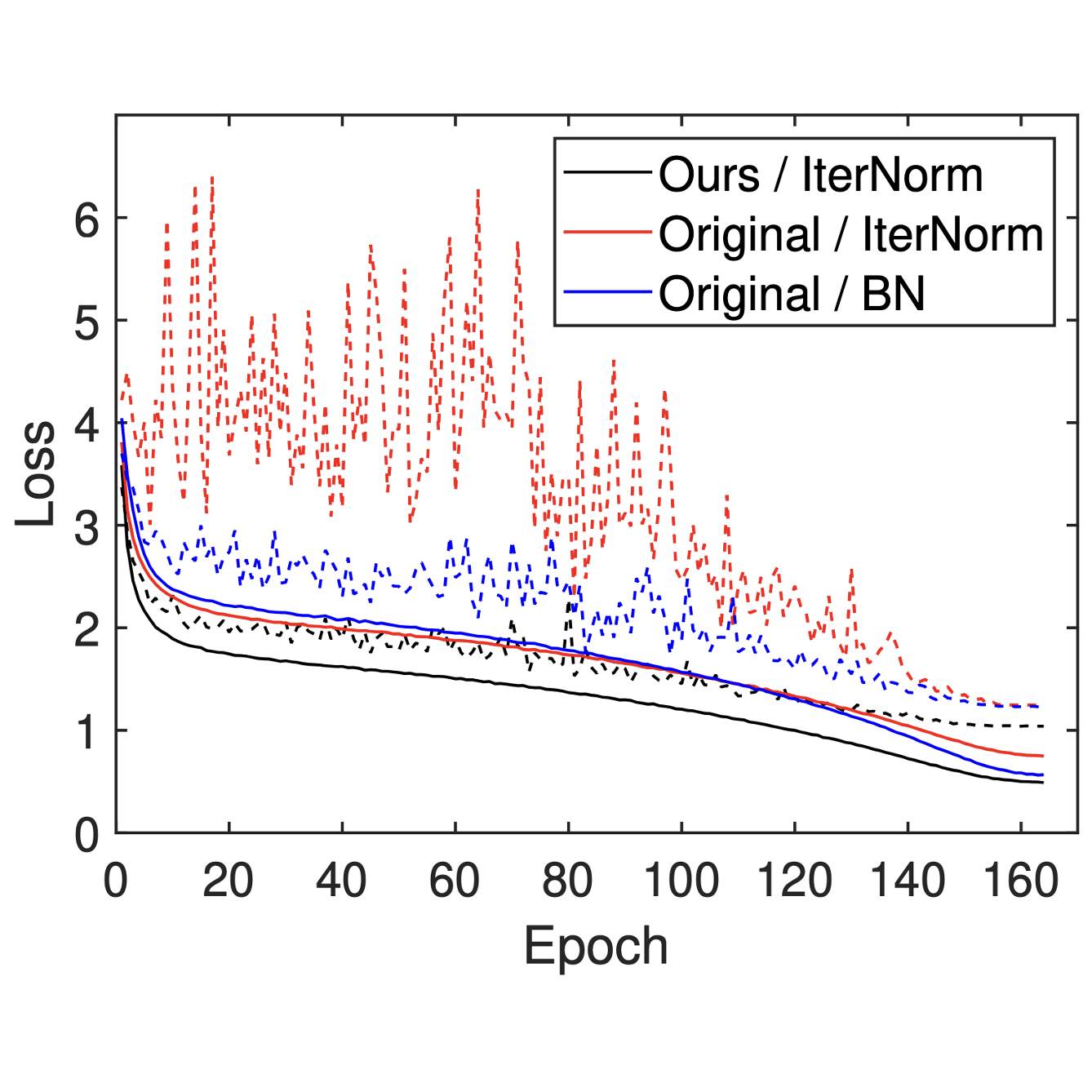
Improving Generalization of Batch Whitening by Convolutional Unit
Optimization
Yooshin Cho,
Hanbyel Cho,
Youngsoo Kim,
Junmo Kim
IEEE/CVF International Conference on Computer Vision (ICCV),
2021
arXiv
Introduces a novel Convolutional Unit that aligns whitening theory with convolutional
architectures,
significantly boosting the stability and performance of Batch Whitening.
|
|
|
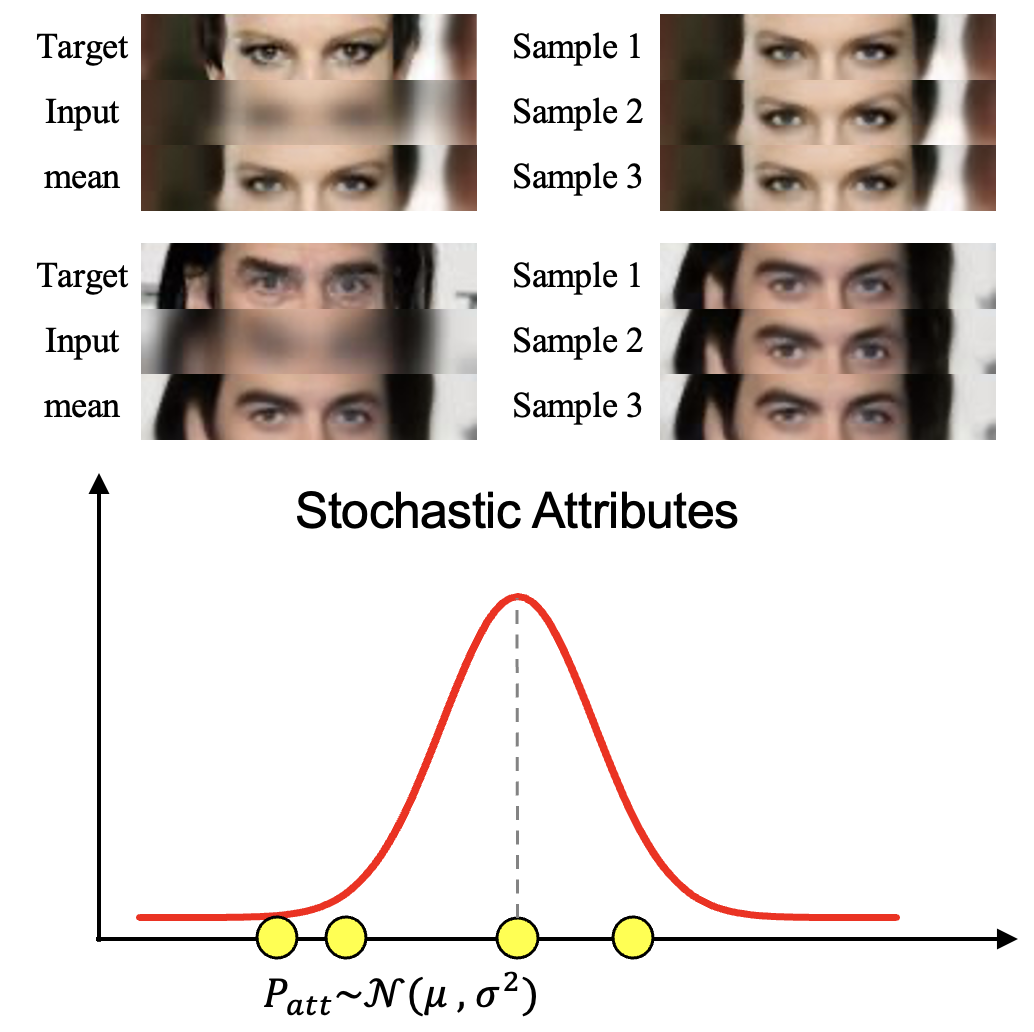
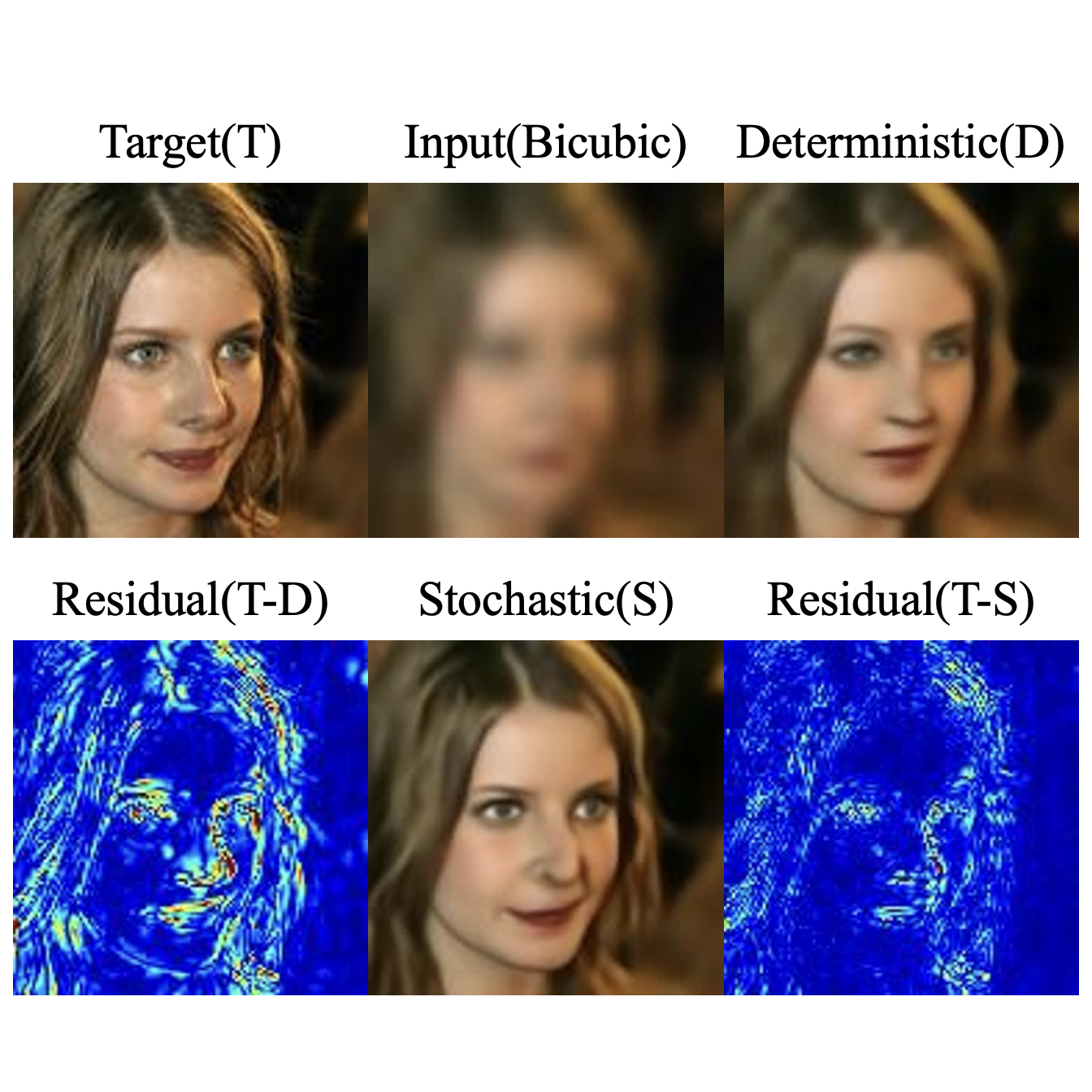
Stochastic Attribute Modeling for Face Super-Resolution
Hanbyel Cho,
Yekang Lee,
Jaemyung Yu,
Junmo Kim
arXiv Preprint, 2020
arXiv
Stochastic modeling-based face super-resolution method that separates deterministic and stochastic
attributes to reduce uncertainty and improve reconstruction quality.
|
|